There’s something wonderfully ordinary about turning on a kitchen tap and filling a glass without giving it a second thought. Water is just there. Until, suddenly, it isn’t quite right.
Maybe there’s a strange taste in your morning coffee. Perhaps your shower screen keeps collecting cloudy mineral spots, or your kettle develops a crusty layer that seems to appear overnight. You might even notice your clothes don’t feel quite as soft after washing them.
These little signs can make you wonder about what’s actually in your household water.
The answer isn’t always to rush out and buy the most expensive filtration equipment you can find. Water quality varies, and so do household needs. A better approach is to understand the problem first, then choose a treatment method that makes sense for your home, budget, and daily routine.
Start With the Water You Already Have
Before comparing products, take a closer look at your water.
Hard water is one of the most common household complaints. It’s caused mainly by dissolved calcium and magnesium, which can form scale on taps, showerheads, pipes, and appliances. You may also notice that soap doesn’t lather as easily or that freshly washed dishes have spots on them.
Then there are other concerns, including sediment, chlorine taste, unpleasant odors, and particular contaminants.
Not every filtration system is designed to handle every issue. That’s an important distinction, and one that’s easy to overlook when product descriptions start throwing around words like “advanced,” “premium,” and “complete.”
If you’re unsure what’s causing the problem, water testing can give you a much clearer starting point.
When Reverse Osmosis Makes Sense
For households looking for more comprehensive treatment of drinking water, reverse osmosis systems are often worth considering.
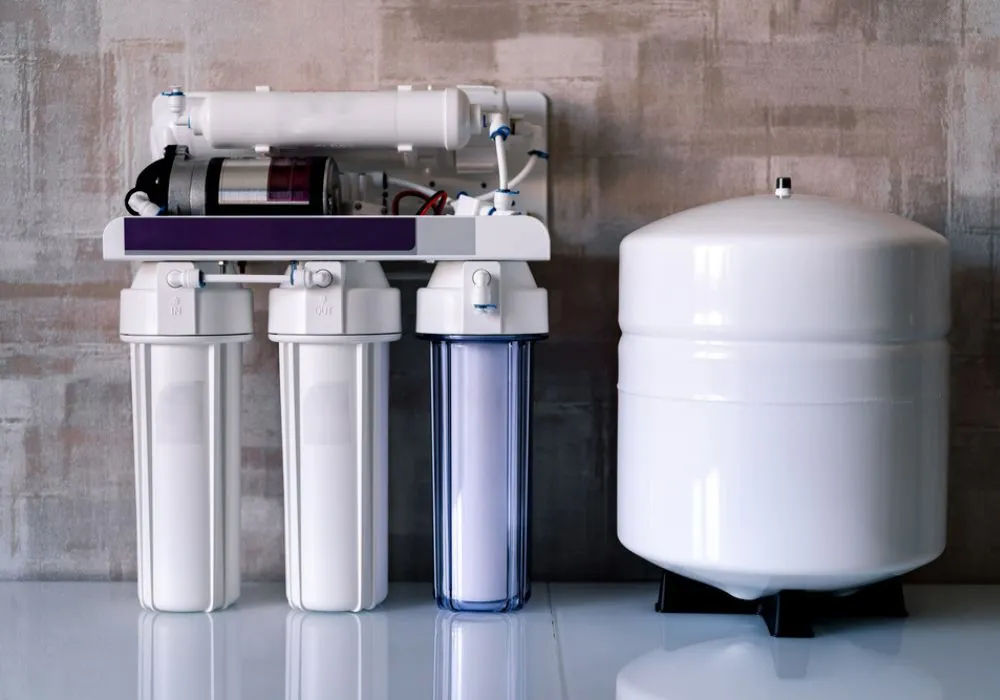
Reverse osmosis uses pressure to push water through a semipermeable membrane. The membrane allows water to pass while reducing many dissolved substances and impurities. Many systems also use additional filtration stages, such as sediment and activated carbon filters, before or after the membrane.
This type of system is commonly installed beneath a kitchen sink and is particularly useful when drinking and cooking water are the main priorities.
There are trade-offs, naturally. Reverse osmosis systems require filter and membrane replacement, and the process can produce wastewater. Installation and ongoing maintenance should therefore be included in the overall cost rather than treated as an afterthought.
Still, for the right water-quality concerns, it can be a very effective option.
Hard Water Requires a Different Approach
Here’s where things get a little confusing.
A water filter and a water softener don’t necessarily do the same job. If mineral hardness is the main issue, a softener may be more appropriate than a standard filtration unit.
Water softeners are designed primarily to reduce hardness minerals, helping limit scale formation throughout the plumbing system. That can make a noticeable difference to bathrooms, water heaters, washing machines, and other water-using appliances.
Softened water can also make cleaning feel easier. Soap tends to lather more readily, and that stubborn ring around the bathtub may become less of a recurring battle.
However, traditional softeners require maintenance, often including regular salt replenishment. They also need enough space for installation and servicing. So before buying one, consider not just the equipment price but how comfortably it fits into your household routine.
Don’t Guess When You Can Test
It’s tempting to diagnose water problems based on taste or appearance. Sometimes that’s useful, but it’s not enough to tell you everything.
Water can look perfectly clear while still containing substances you wouldn’t want to ignore. Conversely, an unpleasant taste doesn’t necessarily mean the water is unsafe.
That’s why free water testing can be a useful first step when it’s available from a reputable provider. It can help identify hardness levels and other characteristics that influence which treatment technology is appropriate.
There is one small caveat: ask what the test actually measures. A basic screening test won’t necessarily provide a complete analysis of every possible contaminant. If you have a specific concern about water safety, an accredited laboratory test may be more appropriate.
In other words, don’t let the word “free” do all the convincing. The details matter.
Point-of-Use or Whole-Home Treatment?
One of the simplest questions to ask is where you want better water.
If you’re mainly concerned about drinking and cooking, a point-of-use system can be practical. It focuses treatment on the taps you actually use for consumption, rather than treating every drop that enters the house.
Whole-home treatment makes more sense when the issue affects showers, laundry, appliances, or multiple fixtures.
Neither approach is automatically superior. Treating the whole house can be more expensive and may require larger equipment. On the other hand, a small kitchen filter won’t address mineral buildup occurring throughout your plumbing.
Think about what you actually use water for. It sounds basic, but it can save a lot of unnecessary spending.
Pay Attention to Flow Rate
Water filtration isn’t only about what’s removed. It’s also about how much water can pass through the system.
A filter that’s too restrictive can reduce water pressure, particularly when several fixtures are operating at once. Imagine turning on the shower and getting a disappointing trickle. Not exactly the upgrade you had in mind.
When comparing systems, look at the recommended flow rate and your home’s typical demand. Larger households may need equipment designed to handle significantly more water than a single-person apartment.
Proper sizing is one of those boring details that becomes very important once the system is installed.
Maintenance Is Part of the Purchase
A filtration system needs care.
Filters eventually become saturated. Membranes need replacing. Some equipment needs cleaning or periodic servicing. If maintenance is ignored, performance can gradually decline.
Before committing to a system, find out how often replacement parts are required and what they cost. Check whether cartridges are easy to find locally or online. Look at the warranty, too.
A system with a slightly higher purchase price but affordable replacement filters can sometimes be the better long-term investment.
It’s much easier to stay on top of maintenance when it isn’t painfully expensive.
Think Beyond the Price Tag
The cheapest water treatment system isn’t necessarily the most economical.
Consider installation, replacement filters, electricity or salt requirements where applicable, servicing, and expected lifespan. A system that costs less today but requires frequent replacement parts could cost considerably more over several years.
It’s also worth asking whether you genuinely need every feature included. Some homeowners end up paying for capabilities their water simply doesn’t require.
Good water treatment should solve a problem, not create a new one.
The Right System Is the One That Fits
Choosing water treatment doesn’t have to become a weekend-long research marathon. Start with the water itself. Identify the issue, test when appropriate, and decide whether your priority is drinking water, household plumbing, hard-water control, or something else.
Then compare systems based on performance and long-term practicality — not just glossy promises.
There’s no single solution that works perfectly for every home. And that’s actually good news. It means you can choose something tailored to your circumstances rather than forcing your household into a one-size-fits-all answer.
In the end, successful water treatment is fairly unglamorous. You install the right system, maintain it properly, and then get on with your life. The water tastes better, the fixtures stay cleaner, and you spend a little less time wondering what’s coming out of the tap.
Sometimes the best home improvement is the one you barely notice — except when you realize how much easier things have become.